





Causes of railway track swaying
 Jun 10, 2025|
 1 Causes of railway track swaying
1.1 Issues with existing line speed upgrades and new line construction
1.2 Issues with daily maintenance and repair
In the daily maintenance of railway lines, equipment and facilities should be inspected and repaired on a cyclical basis with a focus on key areas. If maintenance cannot be carried out on schedule due to the impact of increased construction activities during the summer, issues may accumulate over time, progressing from initial exceedances to more difficult-to-treat defects. Corresponding remedial measures may also become challenging to implement, leading to a decline in overall line quality and triggering rail vibration incidents. Common issues primarily include the following aspects.
(1) Scaly patterns on the inner side of the rail surface, typically ranging from a few millimeters to over 100 millimeters in length, with depths generally between 0.5 and 1 millimeter, and up to 2 millimeters at their deepest. The peak intervals of the unevenness are similar to the wheelbase of locomotives, causing high-frequency impacts on the uneven rail surface as fast-moving locomotives and vehicles pass through such sections. causing the bogie to experience severe vibration, which in turn amplifies the vehicle body's vibration. This significantly impacts the dynamic interaction between the wheel and rail, resulting in substantial vibration acceleration. When locomotives and rolling stock pass through such sections, they experience severe vibration, significantly affecting ride comfort. Especially along the direction of train travel, touching the surface feels like scraping against fish scales. Areas where scales have peeled off are the most severe vibration points, as shown in Figure 1. 󠄐󠄹󠅀󠄪󠄡󠄢󠄣󠄞󠄡󠄣󠄨󠄞󠄡󠄣󠄤󠄞󠄢󠄢󠄩󠄬󠅒󠅢󠄟󠄮 󠄐󠅅󠄹󠄴󠄪󠄡󠄬󠅒󠅢󠄟󠄮󠄾󠅑󠅝󠅕󠄪󠄡󠄣󠄢󠄧󠄩󠄡󠄩󠄧 󠄩󠄧󠄩󠄬󠅒󠅢󠄟󠄮󠇘󠆭󠆘󠇙󠆝󠅵󠇗󠆭󠆁󠄐󠇗󠅹󠅸󠇖󠆍󠅳 󠇖󠅹󠅰󠇖󠆌󠅹󠄬󠅒󠅢󠄟󠄮
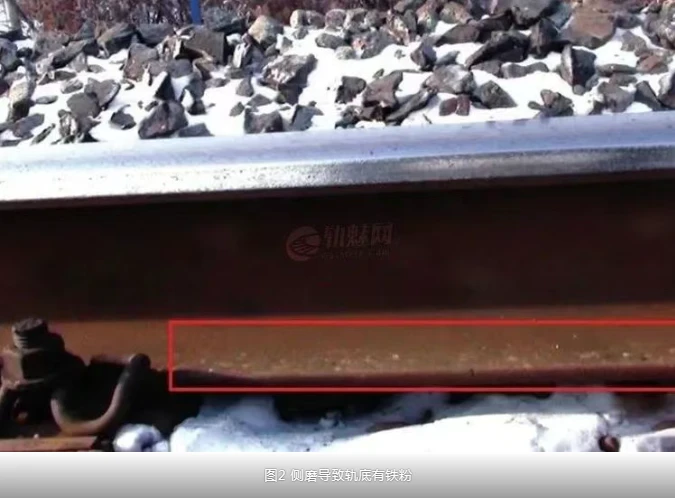
(2) The outer rail of the curve has basic equidistant side wear, with a rough side wear surface. The areas with iron powder on the track bottom are severe swaying points. Side wear is also the root cause of track gauge expansion in railway curves, as shown in Figure 2. 󠄐󠄹󠅀󠄪󠄡󠄢󠄣󠄞󠄡󠄣󠄨󠄞󠄡󠄣󠄤󠄞󠄢󠄢󠄩󠄬󠅒󠅢󠄟󠄮 󠄐󠅅󠄹󠄴󠄪󠄡󠄬󠅒󠅢󠄟󠄮󠄾󠅑󠅝󠅕󠄪󠄡󠄣󠄢󠄧󠄩󠄡󠄩󠄧 󠄩󠄧󠄩󠄬󠅒󠅢󠄟󠄮󠇘󠆭󠆘󠇙󠆝󠅵󠇗󠆭󠆁󠄐󠇗󠅹󠅸󠇖󠆍󠅳 󠇖󠅹󠅰󠇖󠆌󠅹󠄬󠅒󠅢󠄟󠄮
(3) Weld defects are a type of short-wave irregularity. Their presence affects the smoothness and comfort of trains, intensifies vehicle vibration, generates significant impact forces between wheels and rails, increases inertial forces under springs, and increases actual axle loads, thereby significantly affecting the dynamic interaction between wheels and rails and producing large vibration accelerations. In the inspection results of track inspection vehicles and dynamic inspection vehicles, items such as vertical, lateral, horizontal, and vertical acceleration are prone to issues. When riding on a locomotive or EMU, passengers may feel bumpy and experience significant lateral swaying, which is extremely uncomfortable. Due to the smaller axle load of EMUs, they are more sensitive to the straightness of the welded joint edges compared to conventional locomotives. Issues such as uneven welds or weld bead overhangs, particularly those with convex side profiles, can cause EMUs to experience greater horizontal swaying than conventional locomotives. High-speed trains are also more sensitive to unevenness in the rail surface at welded joints than conventional locomotives, again due to their lower axle load, which makes them more prone to bouncing when passing over uneven welds. For welds with unevenness on one side, conventional locomotives typically display vertical acceleration on onboard track inspection instruments, but high-speed trains display horizontal acceleration when passing over such welds. This indicates that certain weld defects may elicit different responses from locomotives and high-speed trains. While locomotives may sometimes respond to such defects, high-speed trains are generally more sensitive to them. 󠄐󠄹󠅀󠄪󠄡󠄢󠄣󠄞󠄡󠄣󠄨󠄞󠄡󠄣󠄤󠄞󠄢󠄢󠄩󠄬󠅒󠅢󠄟󠄮 󠄐󠅅󠄹󠄴󠄪󠄡󠄬󠅒󠅢󠄟󠄮󠄾󠅑󠅝󠅕󠄪󠄡󠄣󠄢󠄧󠄩󠄡󠄩󠄧 󠄩󠄧󠄩󠄬󠅒󠅢󠄟󠄮󠇘󠆭󠆘󠇙󠆝󠅵󠇗󠆭󠆁󠄐󠇗󠅹󠅸󠇖󠆍󠅳 󠇖󠅹󠅰󠇖󠆌󠅹󠄬󠅒󠅢󠄟󠄮

(4) When a train runs on a curve, the wheel flange follows the working edge of the upper rail along the curve. If the positive deflection of the curve section is poor, it will result in an irregular curve, leading to swaying of the train. For example, on the ×× line, the main line with a curve radius of 400m has a difference of 7mm between the actual and planned vertical alignment at the K5+380 transition curve, and a continuous difference of 11mm in vertical alignment between K5+210 and +220 on the circular curve. This exceeds the standards specified in the "Railway Track Maintenance Regulations," resulting in train swaying on this curve, as shown in the figure.
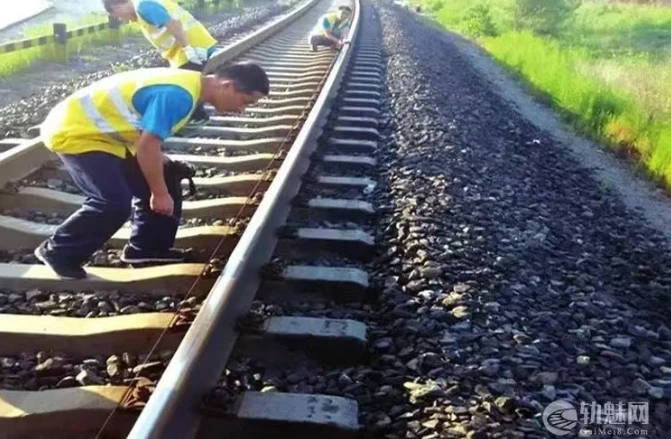
(5) Damage to sleepers, insufficient or uneven clamping force, missing fasteners, or misaligned fasteners can cause the rails to elastically spread apart under dynamic loads. This can also cause train swaying during high-speed operation, as shown in the figure.

(6) Track geometric dimensions exceeding limits, such as elevation, track alignment, and level, leading to composite defects causing vehicle swaying. For example: On the ×× line, field observations at the weld joint of curve K5+185 revealed an elevation deviation of -5 mm over a 5-meter section; at K5+190, a track alignment deviation of 4 mm over a 6-meter section; at K5+200, a track alignment deviation of 5 mm, extending 4 meters; at K5+217, elevation deviation of +5mm, extending 6 meters; at K5+243, horizontal deviation exceeding the limit by +11mm; at K5+248, elevation deviation of +5mm, extending 5 meters; at K5+288, track alignment deviation of 4mm, extending 3 meters, elevation deviation of -5mm, extending 6 meters. (7) Track alignment irregularities and combined track alignment and horizontal irregularities. 󠄐󠄹󠅀󠄪󠄡󠄢󠄣󠄞󠄡󠄣󠄨󠄞󠄡󠄣󠄤󠄞󠄢󠄢󠄩󠄬󠅒󠅢󠄟󠄮 󠄐󠅅󠄹󠄴󠄪󠄡󠄬󠅒󠅢󠄟󠄮󠄾󠅑󠅝󠅕󠄪󠄡󠄣󠄢󠄧󠄩󠄡󠄩󠄧 󠄩󠄧󠄩󠄬󠅒󠅢󠄟󠄮󠇘󠆭󠆘󠇙󠆝󠅵󠇗󠆭󠆁󠄐󠇗󠅹󠅸󠇖󠆍󠅳 Severe track irregularities can generate significant lateral forces, causing the train to undergo severe snake-like movements during operation and potentially leading to derailment. If the straight track is not straight, it will inevitably exacerbate the train's serpentine vibration and generate significant centrifugal force. Centrifugal force is an important factor affecting train stability and passenger comfort. For trains traveling at a constant speed, centrifugal force increases with the increase in track alignment deviation vector. For a given track alignment deviation vector, the train's centrifugal force increases rapidly with the square of the speed multiplier as the speed increases. As such, track alignment deviations on straight sections have a much greater impact on train swaying under high-speed conditions than under normal speed conditions. For the same track alignment deviation value, doubling the operating speed results in a fourfold increase in the train's swaying force.

If you want to know more knowledage, please contact me,I will show you~
